Good for You and for Me.

Who wouldn’t want to hang out with Amy Poehler? The absurdly funny, talented, and lovable comedic actress, writer, and producer seems like any gal’s dream coffee date. She pretty much exudes awkward cool. And because her book is entitled “Yes Please,” she obviously wants to be my friend, too.

I expected Poehler’s book to be a memoir of nonchalant encounters with other amazing stars,  descriptions of Saturday Night Live hijinks, and her delightfully bumpy story of growing into the well-respected role model she is today (with lots of pictures). There were plenty of pictures, and the book is printed on glossy paper that makes it seriously heavy (thanks for the great arms, Amy!) But while her self-effacing humor did not surprise me, her pseudo-older-sister-giving advice vibe did.

The book is broken into sections with inspirational self-help sounding subheadings, such as “Say Whatever You Want” and “Do Whatever You Like.” The tale of how Amy Poehler became a household name is sprinkled throughout the book, interspersed with ironically amusing segments like “Every Mother Needs a Wife” and cleverly designed sections about the perils of believing the head over the heart and vice versa. Many of these chapters/parts of the book are images instead of literal text, which makes them fun to read. She shares some very real, very difficult moments, such as a painful misunderstanding she had because of a skit she performed on SNL about a child with a disability without knowing the backstory. The guilt, heartache, and other emotions associated with this encounter are authentic and real. These are the moments that make the book fantastic in my opinion; the hilarious observations on life, love, and work are just the icing.

Near the very beginning Poehler shares the following gem: “That is the motto women should constantly repeat over and over again–Good for her! Not for me.” The idea that we can be happy for others when we divorce ourselves from comparison is a simple one in theory, but not in practice. She returns to this concept a few times, and even describes the shadow side she feels exists inside herself. Wise big-sister Amy is also purposeful about emphasizing the amount of sacrifice it took for her to be in her current situation. Sure, there are entertaining moments in her comedy club tryouts, and in the awful jobs that paid the bills while she went to them. But I felt I get a better insight into Poehler’s overarching views on life based on what she wrote derisively about: trying to skate by or cut corners. “Good or bad, the reality is most people become “famous” or get “great jobs” after a very, very long tenure shoveling shit and not because they handed their script to someone on the street.” Work hard, kids. Don’t expect it to come easy.

That means I’ll have to double my efforts to set up a gal date with my new BFF.

oh those summer nights

who doesn’t have a soft spot in their heart for memories of summer camp? forging lifelong friendships, spending evenings around a camp fire, indulging your inner artist and of course, making plans to do it all again next year-what’s not to love? just the thought of summer camp reminds us of the innocence of youth, the pervasiveness of dreams, and how easy it was to think the previous two were indefinite.

Meg Wolitzer’s “The Interestings” tells the story of how the summer camp experience proved to be a formative one indeed for a group of kids in New York in the 70s. the differences between the campers are not immediately apparent – some aren’t as well off as others, some have famous parents but don’t talk about it, and the natural talent at this camp for the creatively gifted is more plentiful in some… but for the most part, the general awkwardness of teenagers helps cloud these issues.

unlike traditional coming-of-age tales, the book hits its stride after the teens grow, enter college, and can no longer return to camp. Did they set themselves up for lucrative careers while following the creative instincts they honed in those magical summers at Spirit-in-the-Woods? did they make errors in judgment that will haunt them forever after the idyllic days of their youth? what makes “the Interestings” er.. interesting (sorry, i had to) is the carefully honed disparity between the haves and the have-nots. we examine challenges from the perspective of the privileged, and somehow manage not to hate them for their first-world-problems. then, we follow those youth into middle age and see what happens.

the core group members work hard, pair off, and start families while each achieving varying levels of success in their own eyes. one common thread i enjoyed in the book was how the founders of the camp weigh in occasionally, quizzing each other on the names of former campers and who was talented in which way. out of the original group, one couple acquires wealth beyond imagination, and the definitions of envy and jealousy toward a loved one is unflinchingly examined by our main character Jules: “Jealousy was essentially ‘I want what you have,’ while envy was ‘I want what you have, but I also want to take it away so you can’t have it.'” Although she is jealous of her friends’ great resources, and despairs at the differences between them that keep their friendship from feeling normal, she is also highly protective of the relationship. This is demonstrated in the hilarious and dirty nickname she bestows upon a rival couple for her friends’ affections that also shared their freedom to purchase planes, go on trips, and build a sound proof play room for their children without a second thought.

the financial aspect of the friendship is not even the most compelling part of their lives. job satisfaction, the expectations of others, and the burden of being labeled “gifted” at a young age all play into their realities. the aspects of our lives that can and cannot be controlled sit below the surface as great equalizers.

This novel would have a sweeping feel to it if it wasn’t written in such an intimate way. We are privy to embarrassingly personal details of these characters’ lives… the tiny moments of shame that they carry around inside of them… the guilt they harbor when looking at those they’re meant to love the deepest. Set in my favorite decade and written with a wry grace, it was a totally enjoyable and engrossing read.

Just a Job to Do

I’ve got this thing for a guy named Spademan.

Armed with only a box cutter and a take-it-or-leave-it attitude, the former garbageman is out to save his corner of the world, and screw the rest of it.

I could continue to try and write this post in Adam Sternbergh’s sparse style, but will leave that to the expert.

The second book in Sternbergh’s post-apocalyptic series starring (not set in) New York City, “Near Enemy” features all the elements that made “Shovel Ready” a total guilty pleasure. There’s the hitman himself, the appropriately-named Spademan, who is thrust into a new career after garbage collection ends due to a two-pronged terrorist attack, which caused most city residents to flee or hole themselves up in their homes, where they plug into a new escapist universe called the linosphere. Spademan’s peers also find new ways to get by in the brave new world, whether it’s spying on the dreams of others in the limnosphere, guarding the vulnerable bodies of the wealthy while they’re plugged in, or joining forces with the new hierarchy in city government.

Sure, the story is far-fetched (or so I would like to hope). Sure, it’s told in an unflinching manner with a lack of subtlety, and I found that a significant amount of nuance could be found in the word choice. The truly incredible descriptions of dreams acted out in the limnosphere  (or limn as the verbose Spademan calls it) are captivating, and the plot tears along at a fantastic pace, aided by the crisp and concise dialogue and rich imagery evoked from staggeringly few words.

There are computer geniuses and social outcasts, a baby born to a former church heiress, a convent overlooking Central Park, terrorists and hackers and some seriously badass villians with grotesque and unique methods of dispensing with other humans. If this series is ever made into a movie franchise I’d like to be consulted, because I can picture so much of it in my head and would prefer it’s handled correctly.

If you’ve never heard of Spademan and would like to get on board with an entertaining, gritty, and slightly tongue-in-cheek survival thriller, then go pick up “Shovel Ready.” They’re quick reads and you’ll be happy you started now.

My Kid Sister

Karen Joy Fowler’s “We are all Completely Beside Ourselves” has been one of the most unique reads I’ve completed over the past few years. I have heard all kinds of things about this book, including inklings of unusual circumstances about the story’s central family. So I wasn’t entirely thrown by a small revelation at about the 1/3 point that changes the entire dynamic of the book. Let me just say, if you don’t know and / or don’t want to know this bit of information that is definitely on the book jacket, don’t continue.

We find out that the narrator, Rosemary, was raised with a chimpanzee as her sister, and the story of why both of Rosemary’s siblings are no longer in the family unfolds painfully as Rosemary digs deep and encounters long-lost memories that may or may not be convoluted by time. There are constant illusions to a specific incident that rips her family apart… references to a farmhouse and casual mentions of college students that are also researchers spending time with both Rose and Fern, her twin sister. Then there is Lowell, the moody big brother that Rose idolizes but cannot locate in the present day until she meets a fellow college student with less than pure intentions in a student cafeteria, and this is where our tale begins.

At times frustrating and at others almost droll due to psychology lingo being thrown about as if it’s approachable (which, because she was raised with it, it totally is for young Rose) our narrator’s method of storytelling is slow and possibly plodding. But there is so much humanity poured into every word, we cannot fault her for a minute. How many times have you wrestled with mis-remembering the crimes of your childhood? Now take that number, and imagine your own father was using you for a research study upon which a large sum of money and his reputation was dependent.

I have to mention that this was my first-ever audiobook experience. Instead of reading Rose’s words, I listened to them, and that did make a significant difference. I was at the gym when Rose talked about sneaking out of the farmhouse with her brother in the middle of the night to have an adventure, and pictured the entire scene, and realized I had stopped in the middle of an exercise. There is little to no risk of that happening while flipping pages.

Overall, I do recommend this read. I found the key points were brought together in a clever way because Rose starts her story in the middle (she mentions this a few times in an attempt to pat herself on the back for her writing prowess). Each family member has their own flaws, and my opinion of both human offspring changed a few times as the book progressed. As her memory grows more clear, and then she takes a trip home to see her parents, the exponential growth of Rose’s arrest record becomes a point of humor for the family as well.

By the time I was finished reading it did not seem too unusual to picture two young children with two parents and a chimpanzee at the dinner table, laughing and sharing a meal and making memories. The idea that those children would become attached to the chimp, and do everything to protect her like a normal sibling, made complete sense. Isn’t family, after all, something we build for ourselves?

Life and the Power of Baseball

Ah, spring training. It’s happening. Baseball season is almost upon us!

I recently devoured “One Shot at Forever,” the tale of a high school team beating the odds in the midwest in the early 1970s. Chris Ballard’s book transports you back to that time of societal turmoil, as young men were being sent to war and their parents’ generation despaired at the developing hippie culture. Small town Macon, Illinois was a prime example. When Macon High School hired an English teacher with great recommendations, the board was willing to overlook his long hair. And because he expressed an enthusiasm for baseball, they decided his lack of coaching experience was of little concern.

The Macon Ironmen had mismatched uniforms, a shoddy field, and a penchant for rotating coaches. In fact, they’d had a new coach take the helm in each of the last three seasons before Lynn Sweet came on board. Sweet had an interest in sports, but he wasn’t driven by the W. He received word in the week before the season began that he would be the new coach, he subsequently took a rather informal approach to team leadership. Practices were optional, music was played, and the kids were asked which position they wanted to take on. And the funny thing is, the Ironmen started to win.

Some aspects of the story were rather predictable. We have all seen ragtag-team-turned-winner movies before. We know the unconventional coach will be challenged by a swarm of angry parents with powerful positions on the school board. We can even hear the music swell as the crucial pitch is thrown in the championship game. But do you know WHY these storylines are familiar and keep coming back? Because they work. Because they’re powerful. And, in this particular case, it’s better because they’re true.

I won’t give away what happens with Lynn Sweet’s team. The details may be on the book jacket but I can’t say for sure. What I want to focus on is what a critical role Sweet himself had in these young men’s lives, and in the town of Macon. I appreciate that the author takes time at the end of the book to create a “where are they now?” chapter. Not all of them are pleasant stories, so this is not made-for-Lifetime material.

Sweet taught the men about life and how to live it. These lessons just happened to translate well to baseball. Persistence, passion, authenticity, and being true to self and your own values instead of the pressures of society… those were Sweet’s legacy to his team. Sure, the winning felt good and the losses stung. But fairness and the art of learning from disappointment were what Sweet imparted to his students. He played mind games with the media to protect the team. He taught the players that Macon wasn’t SO small and the world wasn’t SO big to be overwhelming.

Let me break it down for you. I love baseball, and I feel like I should have been born in the 60s, so I truly related to this story. But the end of this book really brought it home for me. The students’ lives, and the legacy of their teacher, are just as interesting as that one high school season that brought them fame.

Thou Mayest

Last night I shut the cover of “East of Eden” and sat in silence for a little while. It was hard to pinpoint where to start reflecting on the book, one which author John Steinbeck described as his “magnum opus.”

The book describes generations of two different families whose lives intersect in the Salinas Valley of California. One man, Adam Trask, moves to the valley from back East in Connecticut, where he had a childhood overshadowed by a brutal, military obsessed father and an intimidating brother. He takes a fortune inherited from his father and relocates with his pregnant wife Cathy, whose own early life is unknown to Adam.

The second man, Samuel Hamilton, is a first generation Irish immigrant raising nine children with his wife Liza on a dusty farm full of failed inventions. Samuel’s role in the community grows deep and well respected. He is consulted at first to help install wells on the Trask farm, and after tragedy strikes, he assists the Trask’s Cantonese cook/servant, Lee, in pulling Adam out of a deep depression.

So many themes of the book–pride, redemption, guilt, self-destruction, self-acceptance, jealousy, and generosity–are taken straight out of the Bible. There are strong parallels between the Biblical tale of Cain and Abel and two sets of Trask brothers: Adam and his brother Charles, plus Adam’s twin sons Cal and Aron.

One key element of the tale involves Lee assisting Sam Hamilton in decoding some text from the Bible, which he does by interpreting the Bible with Cantonese elders. They translate the word “Timshel” to mean “Thou Mayest,” which helps to illustrate one of the largest themes of the book–choice. It almost seems as if the concept of learned helplessness was one to which Steinbeck subscribed; descriptions of Cal attempting to better himself and rise above his shameful blood, buy his father’s love with hard-earned money, and tamp down his teenage emotions and urges could be case studies for Martin Seligman.

Lee and Samuel Hamilton are two of the characters that brought me the most satisfaction, as well as Abra, who is young Aron’s girlfriend. Main character Adam is relegated to patriarch status while others develop around him in the latter half of the book. One of the more harrowing sections is when Lee describes his birth, as told by his father, to Adam. It was both a reality check for Adam and the moment when Lee really becomes a member of the family.

Family is the key to “East of Eden,” and the relationships between family members are the most complicated of all. While considering the primal, Biblical themes woven throughout Steinbeck’s masterpiece, it stands to reason that the ability of man to change, evolve, and rise above his roots is one of the most enduring messages we could receive.

Get On Your Feet

Pedometers seem to be all the rage these days. My iPhone has a step counter that I’ve paid various amounts of attention to over the past few years. Now there are FitBits and “wearable electronics” designed to help people stay in shape. Since the holidays, a handful of people at my job began power walking in a circuit around our break room, pumping their arms and comparing numbers upon arriving and departing the office each day.

We now seem to think our step count can help us achieve goals for overall fitness. To some extent that seems right. For myself, I only use the Health app on the iPhone and let it sit in my pocket during the day (if I’m wearing an outfit with pockets). At the gym, I’ll keep a jacket on OR use the “stick it in my waistband” approach and be grateful for the phone case. I have an armband in my Amazon cart, but I haven’t purchased it yet because the armband seems just so bulky… and fitness is all about fashion, right?

There are desks at my office that can be raised and lowered at the push of a button. For one glorious week this past fall, I lowered mine to be ergonomically in line with the fitness ball that I brought into work and sat on to strengthen my core. Sadly, that fitness ball is now my home office chair. So instead, throughout my day I’ll raise the desk and stand behind it, sometimes doing a box step with my feet to keep moving. The other method I’ve employed is walking up and down the back staircase. This was enjoyable because it’s one of the only sunny places I’ve found in our building, plus, it was fun to multi-task and try to read the news or play Trivia Crack at the same time (not advisable).

IMG_8176

All was well and good with the at-work-stair-climbing routine until the day I set off the alarm. No more stairs for me when I can’t secure the back door in a satisfactory way.

IMG_8178
The stern warning on our back staircase.

So, it’s back to the break room circuit, which is just as hazardous when staring at the rising step count on my phone.

Small Purse Girl

I’ve often wondered what it’s like to be the type of gal who carries a tiny purse. Mine is by no means overly large, like the massive creations with unknown depths that ruin the shoulder and neck muscles of some of my fellow females, but it’s not tiny either.

Displaying IMG_8271.JPG

The purse I have used for the past three years is an Etsy find–a patchwork bag that would fit in a standard bread box, should I choose to put it in one. When I go to sporting events or other places where I prefer not to be tied down, I throw the essentials (ID, cash, credit card, keys) into what is pretty much a pencil case and try not to leave it behind.

Sometimes I look at the ladies who sail through life with phone-case-wallet combinations and am struck with a surge of jealousy. To be so unencumbered! So carefree! What items from my standard issue purse force me to lug them from place to place when I hardly ever remove them, much less use them on a daily basis?

The answer appears to include the following: a clasp wallet full of spare change, two pens, a highlighter, a travel size bottle of Advil, a mini Sharpie marker, two small hand creams, six (6!) types of lip gloss / chapstick, headphones, a camo patch that says “Soul Stealer,” two spare keys to the car I sold in November, a sparkly shiny ring, tissues, a wet wipe, a spare key to the car I own now, a single Band Aid, and a knife. Most of these items would be excluded from a small purse. Obviously, I couldn’t function without that shiny ring.

When I do NOT carry that purse and I transfer the ID, cards, and cash to my little bag I feel light and free. It’s amazing. But then, I don’t have a place to balance my sunglasses when I walk inside, or a convenient zipper pocket for all of my lip gloss. So maybe I will never be a small purse girl, but they have no space for an essential Sharpie.

The Thousand Dollar Tan Line

Last year, I finally got on board the Marshmallow bus. 

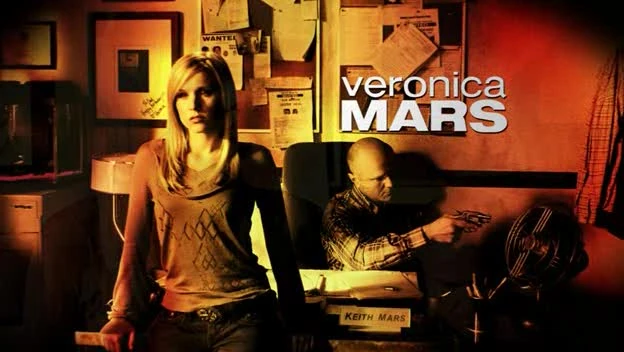
Allow me to explain. Veronica Mars debuted as a TV show starring Kristen Bell as a high school student and not-so-private eye in the volatile town of Neptune, California. The show ran for three seasons before (sadly) coming to an end; fans brought the thunder with a successful Kickstarter campaign to make a V-Mars film 8 years after the series left the airwaves. That tells you something about how tenacious the fans are! Amazingly enough the campaign raised 2 million dollars in 11 hours. I decided to rent the movie one night last fall from Redbox at the urging of a friend, and quickly decided I would watch the series. Currently I’m in season two of the TV show (Amazon Prime members can watch it all for free!) and when I heard that the series creator had added a book to the lineup, I had to get my hands on it immediately.

My exploration of the Veronica Mars story is a bit convoluted–the show begins with the titular character navigating the challenges of high school, then Veronica goes to college. The movie brings her back to Neptune post-college and law school, and the book finds her taking the helm of her father’s private investigation firm after he suffered an accident, which you can see for yourself in the movie.

So as I picked up “The Thousand Dollar Tan Line” there was a whole season of the show which I had yet to see, but that was ok! It’s a fantastic story that stands on its own, but the chance to read, instead of watch, the latest adventure in Veronica’s saga was an absolute delight. The new medium works for her, because Veronica’s narration of her thoughts in both the series and movie puts her voice into the reader’s mind as the pages fly by.

The charge Veronica takes on for Mars Investigations involves locating two missing spring-breakers in the resort town of Neptune. Familiar faces, both friend and foe, come to light as she tries to locate the students for their anxious families at the behest of Neptune’s Chamber of Commerce, which has their eye on the tourist industry. I literally cheered when Veronica’s old pal Weevil showed up! Another notable appearance was by perennial party boy Dick Casablancas, who not surprisingly was in attendance at a blowout in the same location where both lost girls were spotted prior to disappearing. The description of Dick was spot-on and amusing in typical V-Mars fashion: “… he was rich and careless and had the emotional depth of a chunk of concrete.”

Now that I’ve thoroughly enjoyed the first book in this charmingly backwards arc (TV-movie-book), I can’t wait for the second one (which will arrive next week!)

Reader Problems

When it comes to books, I have a serious problem.

The issue? I own way, way too many. My book collection is problematic for a couple of reasons.

The first: I don’t own a home with a room dedicated to books. If I did, I could answer the phone or return a text with the super cool statement: “Well I’m in the library, enjoying a cup of coffee.” I fantasize about someday having a library much like the one in the 90s classic “Ever After.” You know, that scene where Drew Barrymore walks around the monastery and talks about how her father, who used to read to her, “was addicted to the written word.” Let me clarify – I don’t want to own a monastery, but I like the multi-storied one stuffed to the gills with old books. Technically, the root of this problem is that I don’t own a home at all. If I did, it stands to reason that I wouldn’t move so often. When you move frequently, you have to pack up your books and then someone has to carry those boxes of books from point A to point B.

Dougray Scott as Prince Henry and Drew Barrymore as Danielle De Barbarac in Ever After

The second: I love owning books, and find it difficult to stop myself from purchasing more. At any given time, if you would check the Amazon app on my phone, my shopping cart will contain a few books that I’m “researching.” Sure it’s typically because I’m looking at the books — I should really keep a running list of books I want to research — but sometimes I do end up purchasing them.

The third: Libraries just don’t do it for me. Right before a big move I made a little under a year ago, I sent my friend a picture of my book collection, all boxed up and ready to go. Her response? “Haven’t you ever heard of a library?” I have two library cards (and a book checked out right now, actually). The thing is that libraries stress me out. Loan me a book on a deadline, and for some reason to do with anxiety I won’t enjoy the book. Just a few weeks ago I raced to finish “All the Light We Cannot See” before the library closed for the weekend… This was after I had to return it to a different library after only finishing half of it. I’m going to check it out and read the whole thing again (third time’s the charm!) because it was too good for the way I rushed the ending.

IMG_5163

The fourth: My desire to acquire more books outpaces my consumption. I’m blessed to have a very good job, but this job occupies time. The hours I put into my work week are, unfortunately, hours when I cannot be reading. In a given week I could find any number of books that pique my interest. This problem comes down to simple math! Not to mention, I don’t have a good system for tracking my reading (or I didn’t, until I decided to get on board with my friend Chris’s annual book spreadsheet. Read more about it (ha!) here.) I hope to get through the books on my shelf that haven’t yet been read, and be more organized about it, this year.

The thing is, I find comfort in books. It’s great to look at my book shelf and know that in it I can find entertainment, wisdom, and companionship. Now if only I could manage it more efficiently. Is there a book collection organization book? Let me check Amazon.

IMG_8234

Design a site like this with WordPress.com
Get started